
Why Faded Fire Lane Markings Put Your Business at Risk: What Every DFW Property Owner Needs to Know
Most property managers do not think about their fire lane markings until a fire marshal flags them during an inspection, and by then the cost of inaction has already climbed. Faded, chipped, or otherwise illegible fire lane markings are not just an eyesore. They are a compliance violation, a liability exposure, and in a genuine emergency, a potential obstacle to life-saving response. At Alliance Pressure Washing & Striping, we have been helping Dallas-Fort Worth businesses stay safe and code-compliant since 2007. As a family-owned company serving the entire DFW metroplex, from Fort Worth and Dallas to Arlington, Plano, and North Richland Hills, we bring nearly two decades of experience and commercial-grade equipment to every fire lane striping project. Our clients count on us to know the local codes, use durable materials, and get the job done right the first time. If your fire lanes have seen better days, here is exactly why that matters and what to do about it.
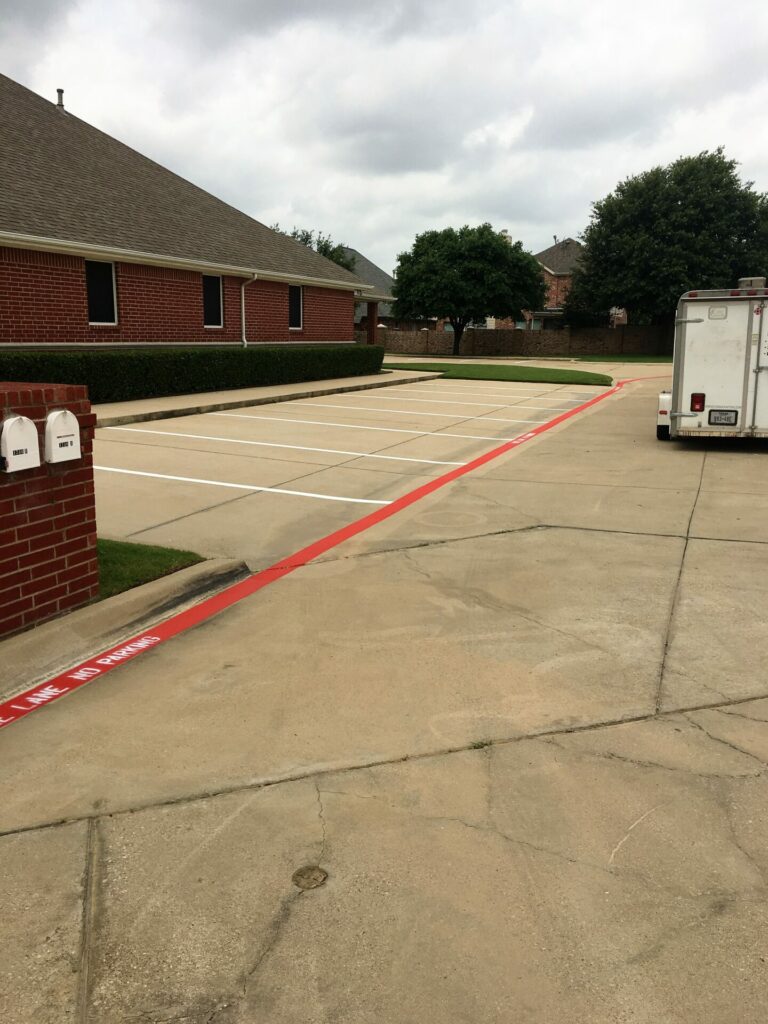
Fire Lane Compliance in Texas: What the Law Actually Requires for Your Property
Texas law is clear on this point. Under Texas Occupations Code Section 2308.251, fire lane curbs must be painted red and conspicuously marked with “FIRE LANE — TOW AWAY ZONE” in white letters at least three inches tall, at intervals not exceeding 50 feet. Cities across the DFW metroplex layer additional requirements on top of that state baseline, and those requirements vary by municipality.
What North Texas Fire Lane Codes Require
Across the Dallas-Fort Worth metroplex, fire lane markings generally must meet the following standards:
- Lane width: Fire lanes must be at least 20 feet wide in Dallas County and 24 feet wide in Denton County to accommodate fire apparatus
- Curb and pavement paint: Red paint must be applied to curbs and pavement, with stripes at least 6 inches wide
- Stenciled lettering: “FIRE LANE — NO PARKING” must appear in white or yellow letters at 20 to 25-foot intervals, depending on the city’s ordinance
- Visibility standard: All markings must be clearly visible and not faded, chipped, or obscured in any way
- Signage: Posted signs reinforcing the no-parking restriction are required alongside the painted markings
The key phrase in every version of this code is “clearly visible.” That is where faded markings fail, and where fire marshals issue citations.
The Hidden Risks of Ignoring Faded Fire Lane Paint
Many property owners assume that as long as some red paint is visible, they are technically in compliance. That assumption is wrong, and it carries real consequences.
Fines and citations. Fire marshals throughout the DFW metroplex conduct regular inspections of commercial properties. Worn, chipped, or fading fire lane paint that no longer meets visibility standards results in citations and fines. Non-compliance can also create delays in renewing business licenses or securing occupancy permits during a remodel or expansion.
Legal liability. If an emergency occurs and a fire truck is delayed because a vehicle was parked in an inadequately marked fire lane, the property owner may face significant legal exposure. Faded markings that failed to deter unauthorized parking become a documented negligence risk in litigation.
Blocked emergency access. This is the consequence that matters most. When fire lanes are not clearly marked, drivers do not recognize them as restricted zones. In the dense commercial corridors of Fort Worth, Arlington, and Plano, that means vehicles routinely park in lanes that need to stay clear. Seconds matter in a fire response, and an obstructed lane can mean the difference between a contained incident and a catastrophic one.
Why Texas Heat and Traffic Accelerate Fading
North Texas conditions are particularly hard on fire lane paint. Summer UV intensity in DFW is among the highest in the country, and prolonged exposure to direct sun bleaches red paint faster than in cooler climates. Heavy commercial traffic, delivery truck activity, and the freeze-thaw cycles that occur during DFW winters all chip away at surface paint adhesion over time.
What looks adequately visible in November may be in clear violation of the visibility standard by the following July. For busy retail centers, apartment complexes, office parks, and industrial properties across the metroplex, annual fire lane re-striping is not an excessive precaution. It is a responsible maintenance standard.
Why Surface Preparation Makes Re-Striping Last Longer
One of the most common reasons freshly painted fire lanes fade faster than expected is that the surface underneath was not properly prepared before painting. Oil residue, old paint buildup, road grime, and concrete dust all prevent new paint from bonding fully, which leads to peeling and premature fading.
Alliance always pressure washes before any striping project. Our commercial-grade equipment heats water up to 250 degrees to remove the contaminants that cause paint failure at the surface level. Investing in proper preparation upfront means your fire lane markings last significantly longer, which reduces the frequency of re-striping and lowers your overall maintenance cost over time.
Do Not Wait for a Citation to Act. Contact Alliance Pressure Washing & Striping Today for a Free Fire Lane Assessment Across the DFW Metroplex!
Whether your fire lanes are overdue for a refresh or you are not sure if your current markings still meet local code, Alliance is here to help. We know the ordinances in Dallas, Fort Worth, Arlington, Plano, and every community in between, and we will make sure your property is marked correctly, durably, and ready for any inspection. Call us today or reach out online for your free quote. Keeping your fire lanes compliant is one of the simplest ways to protect your business, your tenants, and the people who depend on emergency access when it matters most.